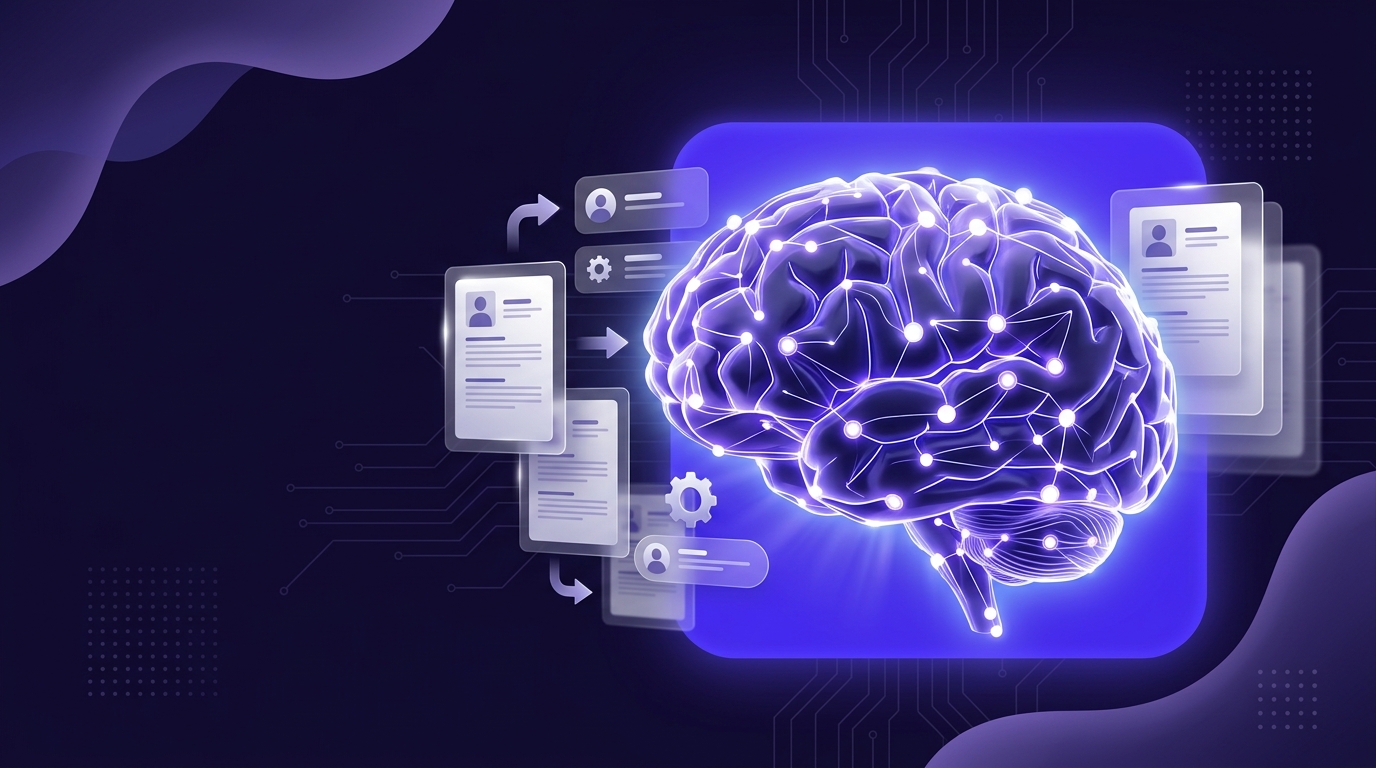
Why AI resume screening is changing hiring forever
Recruiters spend an average of 6–7 seconds scanning a single resume. Multiply that by hundreds of applicants, and it's easy to see how top candidates slip through the cracks. AI resume screening is transforming this reality, helping talent teams process thousands of CVs in minutes, not weeks.
Whether you're a startup scaling fast or an enterprise managing high-volume hiring, understanding how AI CV screening works, and how to use it well, can be the difference between a great hire and a costly mis-hire. Let's break it down.
What is AI resume screening?
AI resume screening is the use of artificial intelligence to automatically evaluate, rank, and shortlist job applicants based on their resumes or CVs. Instead of manually reviewing every application, an AI Screening Agent parses resumes, extracts key data points, and scores candidates against predefined job criteria.
The result? Faster shortlists, reduced bias (when done right), and more time for recruiters to focus on what matters, human conversations.
How AI resume screening works
1. Resume parsing
The AI first extracts structured data from unstructured resume text, names, skills, experience, education, and more. Modern parsers handle PDFs, Word docs, and even LinkedIn profiles with high accuracy.
2. Job description matching
The system compares extracted candidate data against the requirements in your job description. Skills, qualifications, years of experience, and role-specific keywords are all factored into a relevance score.
3. Candidate scoring and ranking
Each applicant receives a score or ranking. AI CV screening tools use a mix of natural language processing (NLP), machine learning models, and configurable rules to generate these scores.
4. Automated candidate shortlisting
Top-ranked candidates are surfaced automatically. Recruiters review a curated shortlist instead of the full applicant pool, slashing time-to-shortlist dramatically.
Key features to look for in AI CV screening tools
Not all tools are equal. When evaluating platforms, prioritize these capabilities:
Configurable scoring criteria - the ability to weight skills, experience, or certifications differently per role
Bias detection and mitigation - features that anonymize demographic info to reduce unconscious bias
ATS integration - seamless sync with your existing applicant tracking system
Explainability - clear reasoning behind every candidate score so recruiters can trust (and override) decisions
Multilingual support - essential for global talent pipelines
Best practices for AI resume screening
Define your criteria before you screen
The AI is only as good as the job description you feed it. Write clear, structured JDs with specific skills, must-haves, and nice-to-haves. Vague inputs lead to vague shortlists.
Combine AI with human judgment
AI resume screening excels at volume and consistency, but human recruiters add context, culture-fit intuition, and empathy. Use AI to narrow the field, not replace the final call.
Audit for bias regularly
Periodically review shortlist demographics to ensure your AI Screening Agent isn't inadvertently filtering out diverse candidates. Adjust criteria if patterns emerge.
Keep candidates informed
Automated candidate shortlisting can feel like a black box to applicants. Build trust by communicating your process and offering feedback where possible.
Continuously improve with data
Track which shortlisted candidates actually succeed in the role. Feed this data back into your model to improve future screening accuracy.
How Whitecarrot.ai makes AI resume screening effortless
Whitecarrot.ai is built specifically for teams who want the power of AI CV screening without the complexity of enterprise tooling.
AI resume screening is the automated process of using artificial intelligence to evaluate, score, and rank job applicants based on their resumes, replacing or augmenting manual CV review by recruiters.
Is AI CV screening accurate?
Modern AI CV screening tools are highly accurate when configured properly. Accuracy depends on the quality of the job description, the scoring rubric, and regular auditing. Most platforms achieve 85–95% alignment with recruiter decisions on well-defined roles.
What types of companies benefit most from automated candidate shortlisting?
Any company receiving more applicants than their TA team can manually review benefits from automated candidate shortlisting. This is especially true for high-growth startups, enterprise firms, and companies hiring across multiple roles simultaneously.
How do I get started with AI resume screening?
Start by defining your most common hiring profiles, then choose a tool that lets you configure scoring criteria per role. Whitecarrot.ai offers a fast setup with no technical configuration required - get started here.
Table of Content
Skip the hiring hassle
See how Whitecarrot helps you source, screen, and hire faster with AI.