If you are scaling hiring, AI recruitment agent can feel like adding a tireless recruiter who works 24/7 on sourcing, screening, and follow-ups while your team focuses on interviews and offers. Instead of drowning in manual resume reviews and LinkedIn searches, AI agents turn recruiting into a system that runs in the background and keeps your pipeline warm.
In this guide, we will break down what an AI recruitment agent is, how it works, the benefits of AI recruitment agent tools, key features to look for, AI recruitment agent alternatives, pricing, and how Whitecarrot.ai fits into your stack.
What is an AI recruitment agent?
A best AI recruitment agent is software that autonomously handles recruiting workflows such as candidate sourcing, profile matching, outreach, screening, and interview scheduling based on your hiring rules and data. Think of it as an AI copilot that sits on top of your ATS, job boards, and LinkedIn to keep roles consistently moving forward without manual effort.
Modern AI agents use natural language processing, machine learning, and integrations with tools like email, calendars, and CRMs to deliver a more scalable and predictable hiring engine.
How AI recruitment agent works
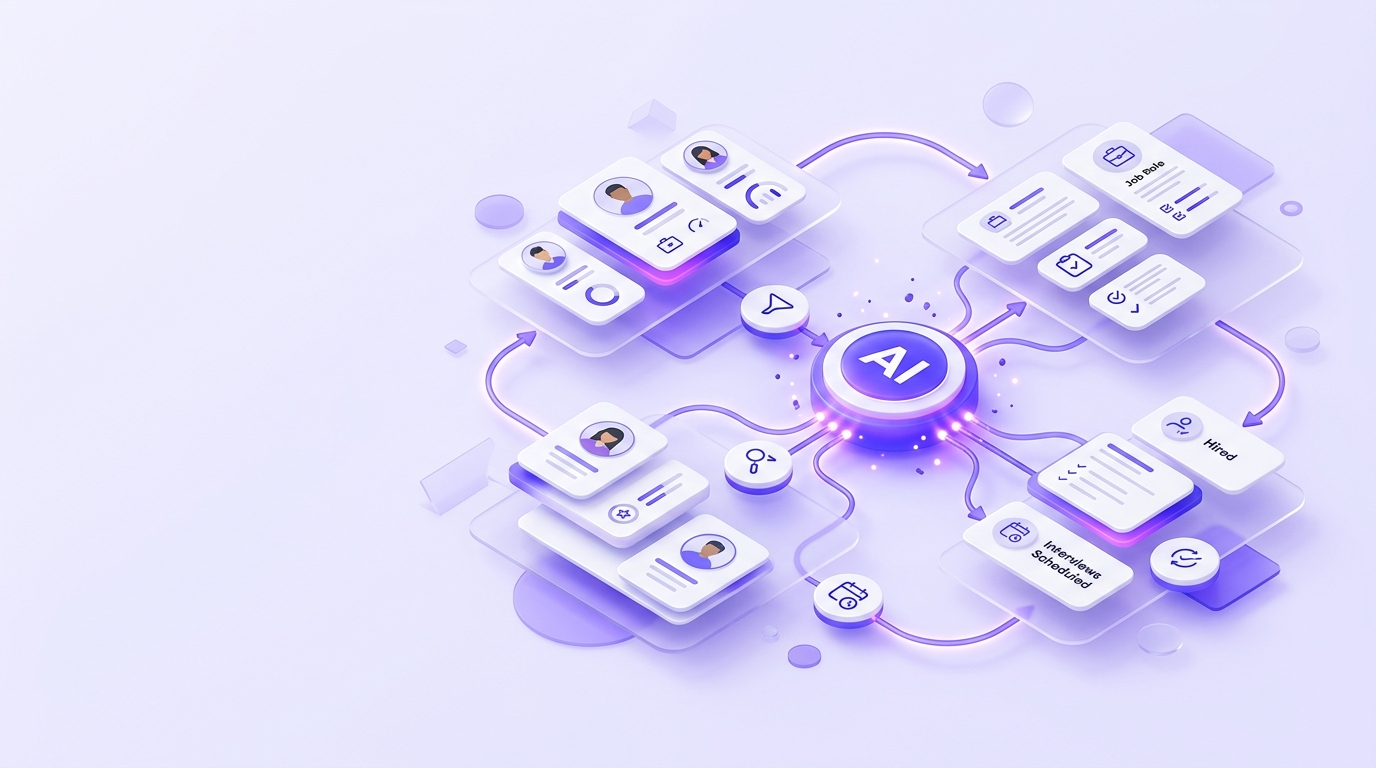
Most AI recruitment agents follow a similar end-to-end flow from job intake to interview scheduling.
Core workflow steps
Candidate sourcing The AI recruitment agent searches job boards, LinkedIn, GitHub, and internal databases using your role criteria, then builds a prioritized candidate list.
Profile matching and scoring It analyzes skills, experience, companies, and signals such as activity to score candidates against each job description.
Personalized outreach and follow-ups The agent drafts tailored messages, sends them at scale, and automatically follows up when candidates do not reply, improving response rates.
Screening and scheduling Many tools support AI-powered screening questions, video responses, or chat-based interviews and then book meetings directly into recruiter calendars.
This is why the best AI recruitment agent feels like a continuous engine rather than a one-off tool – it keeps searching, filtering, messaging, and updating your pipeline in the background.
AI recruitment agent features to look for
When evaluating AI recruitment agent features, focus on capabilities that actually move roles to “hired,” not just shiny AI.
Smart matching and ranking based on skills, experience, and culture fit signals
Automated, personalized outreach and follow-ups at scale
AI screening via forms, chat, or video interviews
Interview scheduling and calendar sync to remove back-and-forth
Bias detection and compliance support where available
Analytics and talent intelligence so you can measure time-to-hire, response rates, and quality of hire.
Key benefits of AI recruitment agent tools
The benefits of AI recruitment agent platforms show up quickly in time, cost, and candidate experience.
Faster time-to-hire: AI recruiting systems can source hundreds of candidates weekly and automate outreach, dramatically shortening hiring cycles.
Lower cost per hire: Case studies report cost-per-hire reductions of up to 50 percent when AI rediscovery and automation are deployed.
Better recruiter productivity: Recruiters spend more time interviewing and less time on repetitive tasks like searching, filtering, and updating spreadsheets.
Improved candidate experience: Always-on communication and faster responses make your employer brand stand out.
Top tools and AI recruitment agent alternatives
Several vendors now offer agentic AI recruiting capabilities across sourcing, screening, and scheduling.
For a broader comparison, you can also explore independent reviews of AI recruiting software, which cover more tools, pricing ranges, and use cases. This is a useful AI recruitment agent review starting point when building your shortlist.
AI recruitment agent pricing: what to expect
AI recruitment agent pricing depends on volume, features, and target customer segment.
SMBs and agencies often see seat-based or role-based plans that scale with active jobs and email volume.
Mid-market and enterprise tools frequently price by number of employees, modules (sourcing, screening, analytics), or overall annual contract value.
Some AI recruitment agent alternatives bundle features into full recruitment suites (ATS + CRM + AI) rather than standalone agents, which influences total cost of ownership.
Review sites such as G2 and Capterra list pricing tiers, feature comparisons, and user-provided AI recruitment agent reviews for platforms like Whitecarrot and others.
Why Whitecarrot is your best AI recruitment agent
Whitecarrot is an end-to-end AI recruitment platform that streamlines every stage of hiring, from headcount planning to sending offers. It combines AI shortlisting, candidate assessment, interview management, and onboarding into a single system, making it a strong candidate when you search for the best AI recruitment agent for modern teams.
Customers highlight features like video interviews, screening questions, coding challenges, resume parsing, bulk email campaigns, and automated scoring that significantly reduce time spent on initial screening. For companies in the GCC and beyond, Whitecarrot’s AI recruitment agent features turn hiring into a strategic, data-driven advantage rather than a manual grind.
Frequently Asked Questions
Common questions about this topic answered below.
Is an AI recruitment agent a replacement for recruiters?
No. AI recruitment agents handle repetitive tasks like searching, filtering, messaging, and updating pipelines so recruiters can focus on interviews, stakeholder alignment, and final decisions.
How accurate is AI screening compared to manual review?
When trained on good data and used with clear criteria, AI screening can quickly surface high-potential candidates and reduce human error, especially at the top of the funnel. Recruiters should still review and override decisions where needed.
How do I evaluate AI recruitment agent pricing and ROI?
Compare subscription costs to metrics like time-to-hire, recruiter hours saved, cost-per-hire, and candidate response rates before and after implementation. Case studies show that well-implemented AI recruitment agents can cut cost-per-hire and speed up hiring enough to self-fund the investment.
How is an AI recruitment agent different from a regular ATS?
A traditional ATS stores data; an AI agent actively works that data—ranking candidates, messaging them, and booking calls autonomously.
Table of Content
Skip the hiring hassle
See how Whitecarrot helps you source, screen, and hire faster with AI.

.png)