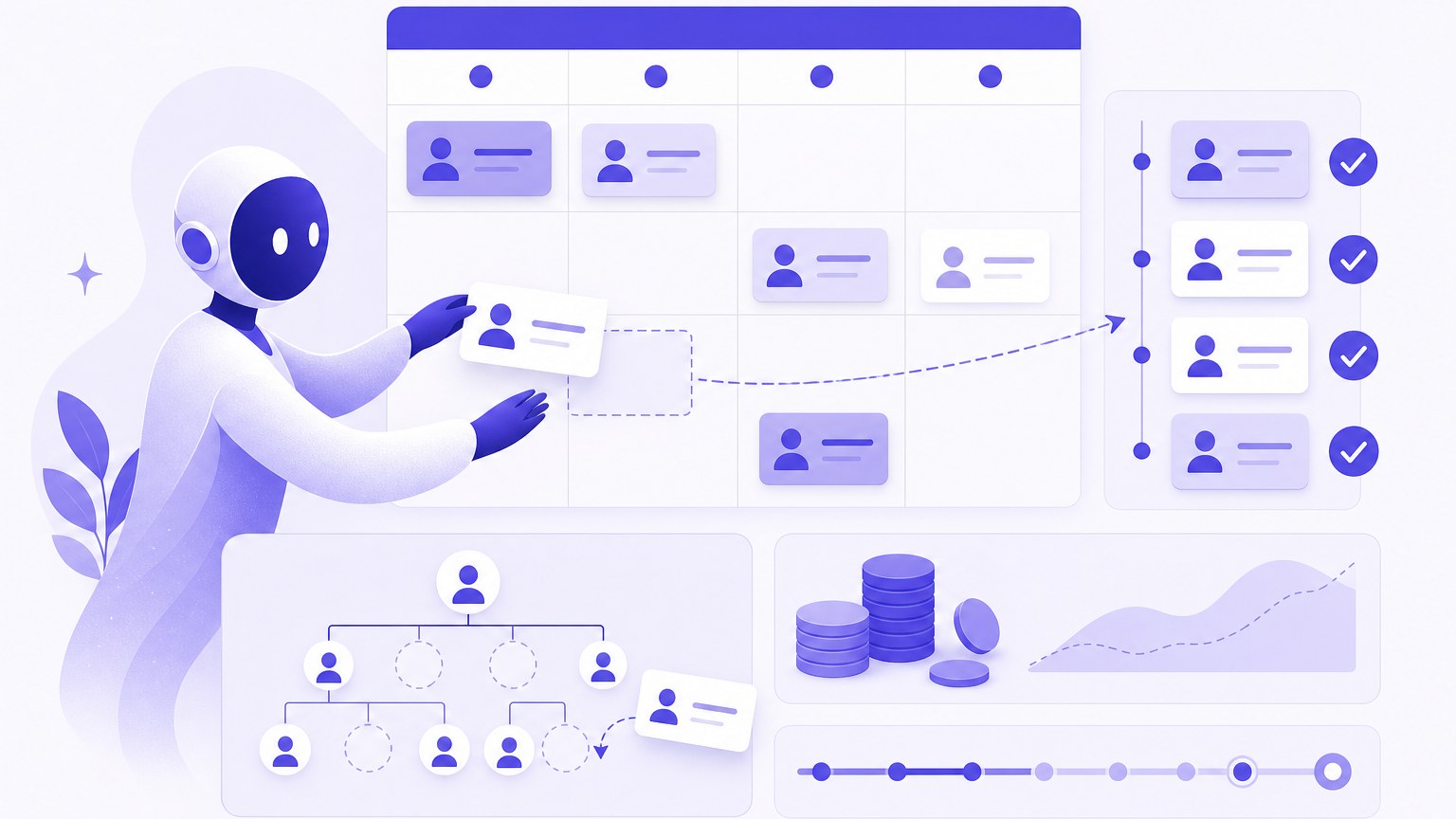
An AI agent for recruitment planning is software that turns a company's growth plan into approved, ready-to-post roles. It forecasts which roles each team needs, drafts the job description and skills, checks every role against salary bands and headcount budget, and routes the plan to finance and leadership for sign-off before sourcing begins.
Most AI in hiring today works after a job is already open: it sources, screens and schedules. The planning stage, where a role is defined, costed and approved, still runs on spreadsheets and email threads in many companies. This guide explains what a recruitment planning agent does, how it differs from an AI agent for talent acquisition, which tools offer it in 2026, and what to check before you buy one.
What is an AI agent for recruitment planning?
An AI agent for recruitment planning is an AI system that handles the work between "we need to hire" and "the job is live". A human gives it a goal, such as a growth plan for the next two quarters, and the agent breaks that goal into roles, writes each role's job description and skill framework, and tests the plan against company rules. It then sends the plan through the approval chain and opens requisitions once they are signed off.
The word "agent" matters. A planning template or a headcount spreadsheet waits for a person to fill it in. An agent takes steps on its own: it drafts, checks, routes and follows up, and asks a human only when a decision needs judgement. The output is not a report but an approved hiring plan that the rest of the recruiting process can act on. For a broader primer on agents across the whole funnel, see our guide to what an AI recruitment agent is and how it works.
What does recruitment planning AI actually do?
Recruitment planning AI covers five jobs that HR, finance and hiring managers usually pass between each other by email. A good agent does each one inside one system, so the plan, the budget and the approvals never drift apart.
Manpower forecasting: maps the business plan to roles by department and quarter, so hiring follows growth rather than reacting to resignations.
Job description drafting: turns a plain-language request ("a senior accountant for our Abu Dhabi entity") into a structured description with responsibilities, requirements and a pay band.
Skill frameworks: sets the competencies each role is judged on, so every interviewer scores candidates against the same standard.
Policy and budget checks: tests every role against salary bands, headcount budget and compliance rules before anyone approves it.
Requisition approval: routes the plan to the hiring manager, finance and a senior leader, tracks who has signed, and opens the job once everyone has.
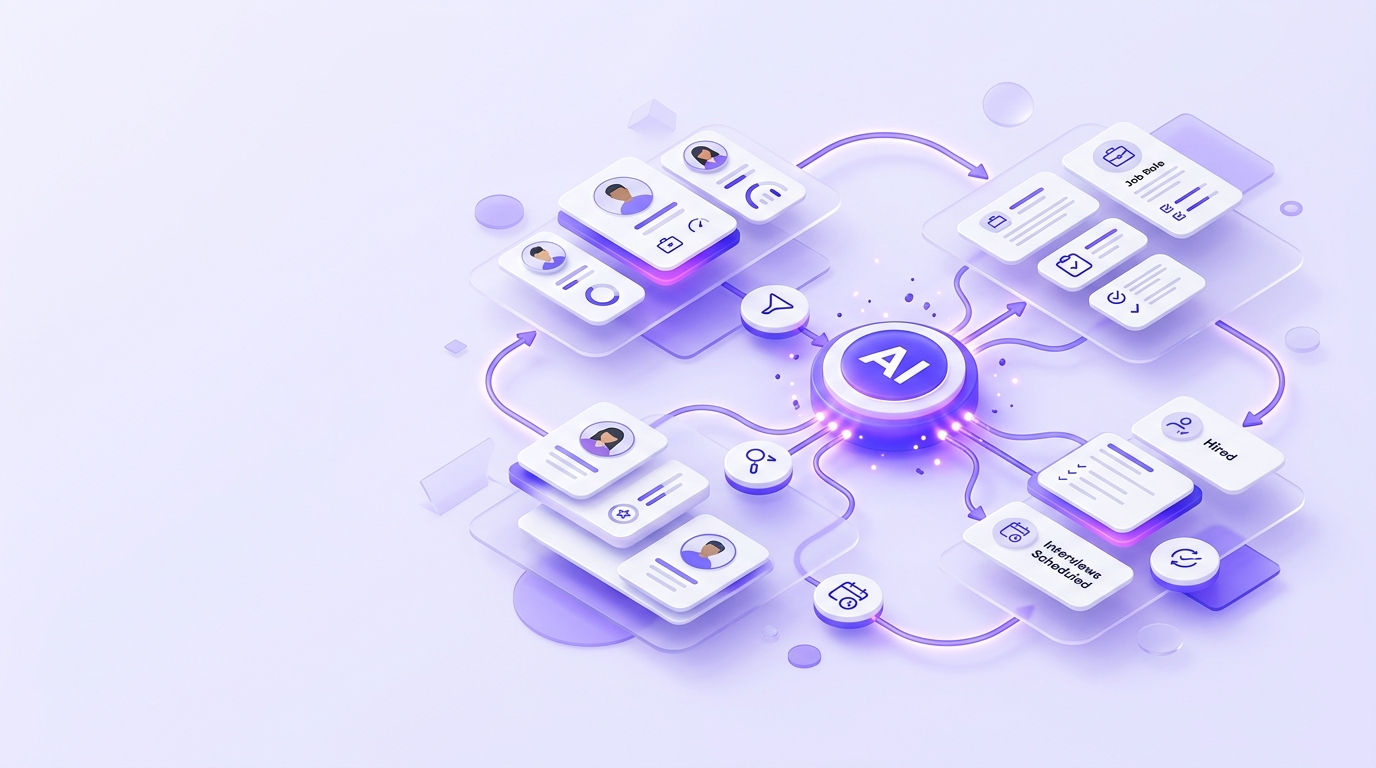
A hiring plan AI follows the same order a careful HR team would, but it does not wait days between steps. The sequence below is how an AI agent for recruitment planning moves a role from growth plan to approved requisition.
Forecast. The agent reads the growth plan and maps it to roles by department and quarter.
Define. It drafts the job description and the skills each role needs, using your levelling rubric.
Check. It tests every role against salary bands, headcount budget and policy, and flags anything out of range.
Approve. It routes the plan to the hiring manager, finance and a senior leader, and tracks approvals in real time.
Hand off. It opens the approved requisition and passes it to sourcing, so job posting starts the same day.
From growth plan to approved requisition, before sourcing begins.
The handoff in step five is where most manual processes lose time. Factorial's help centre describes the same idea for its headcount tool: once a plan is approved and locked, one job opening is created for each approved position, and each position stays linked to its hiring status so teams can see which planned roles are open, in progress or filled.
AI agent for recruitment planning vs AI agent for talent acquisition: what is the difference?
An AI agent for talent acquisition usually means an agent that works on open jobs: it sources candidates, screens CVs, schedules interviews and messages applicants. An AI agent for recruitment planning works earlier, deciding which jobs should exist, what they pay and who approves them. The two are complements, not substitutes. A planning agent without an execution agent leaves approved roles waiting for recruiters; an execution agent without planning fills roles that were never properly costed or scoped.
AI agent for recruitment planning
AI agent for talent acquisition
Starts from
A growth plan or a hiring request
An open, approved job
Main output
Approved requisitions with job descriptions, skills and pay bands
A shortlist, booked interviews and an offer
Main users
HR leaders, finance, hiring managers
Recruiters, hiring managers, candidates
Typical tasks
Forecasting, drafting, budget and policy checks, approval routing
Time to plan, budget accuracy, plan vs actual hires
Time to hire, quality of shortlist, offer acceptance
The strongest setups run both on one record, so the skills set at planning become the screening criteria at AI shortlisting without anyone re-typing them.
What are the benefits of recruitment planning AI?
The main benefit of recruitment planning AI is speed at the stage nobody measures. Hiring teams track time to hire from the day a job opens, but the days spent writing, costing and approving the role are often invisible. At Whitecarrot customers, time to plan a role fell from 21 days to 6 once the plan, the policy checks and the approval routing moved into one system instead of spreadsheets and email approvals.
Time from hiring request to an approved, ready-to-post role.
Other benefits follow from the same change:
Fewer budget surprises: roles outside the salary band or headcount budget are flagged before approval, not after the offer.
Consistent hiring standards: one skill framework per role means every interviewer scores against the same criteria.
Less chasing: approvers are notified when it is their turn, so HR stops sending follow-up emails.
Better recruiter capacity: recruiters start each search with a complete, approved brief.
Talent leaders are moving this way. According to Korn Ferry's 12th annual Talent Acquisition Trends report, released in October 2025 and based on over 1,670 talent leaders, 52% plan to add autonomous AI agents to their teams in 2026, and 84% plan to use AI next year. LinkedIn's 2025 Future of Recruiting report, as summarised by Recruiting News Network, found 37% of organisations actively integrating or experimenting with generative AI in hiring, up 10% year over year.
Which tools offer recruitment planning AI in 2026?
Few tools cover the full planning stage, and many products sold as an AI agent for talent acquisition start only once a job is open. The comparison below uses each vendor's own public pages. Pricing for these planning features is not published as a fixed list price by any of the four, so ask each vendor for a quote based on your headcount.
Sourcing, screening, scheduling and candidate messaging inside Workday; monitors requisition health and pipeline risk. Its page does not describe creating the plan or the requisition
AI job descriptions, skill frameworks, policy setup for pay bands and headcount budget, manpower planning by quarter, automatic approval routing, contract role briefs
AI agent (planning and execution)
GCC companies of 50 to 5,000 people
Workday's agent is strong once roles are open, and it reports customer results such as a 25% cut in time-to-fill at Accenture. Workable's Hiring Plan gives finance useful reports on planned versus offered salary. Neither page describes AI drafting or costing the plan itself, which is the gap a planning agent fills.
What features should you look for in an AI agent for talent acquisition planning?
When you compare an AI agent for talent acquisition planning, test it on a real role from your next quarter, not on a demo script. The checklist below separates true planning agents from requisition forms with an AI label.
Plan to requisition in one record: the approved plan becomes the requisition and then the job post, with no re-typing.
Policy rules you set once: salary bands, headcount budget and compliance rules applied to every role automatically.
Approval chains by entity: different approvers for different legal entities, countries or departments, which matters for GCC groups with several companies.
Editable AI drafts: job descriptions and skill frameworks a hiring manager can change before approval.
Audit trail: who approved what and when, for finance and internal audit.
Link to screening: the skills set at planning carry into CV scoring and interview scorecards.
Integrations: calendar, job boards and your HRMS, so onboarding data does not need re-entry.
How do you roll out recruitment planning AI?
Rolling out recruitment planning AI works best when you start with the rules, not the roles. The agent can only check a plan against policies it has been given, so the first week is spent writing those policies down.
Write down your rules: salary bands by level, headcount budget by department, and who must approve which roles.
Pilot one department: pick a team with a clear growth plan for the next quarter.
Measure time to plan: record the days from request to approved role before and after.
Connect the next stage: once plans flow, link the approved roles to posting and screening.
Extend by entity: add other companies or countries with their own approval chains.
What are the limits of an AI agent for recruitment planning?
An AI agent for recruitment planning is only as good as the plan and the rules it is given. If the growth plan is vague, the forecast will be vague; if salary bands are out of date, the agent will approve roles at the wrong pay. The agent should prepare and route decisions, not make them: a hiring manager and finance still sign off every role. Teams should also check how the vendor stores compensation and headcount data, since both are sensitive. Finally, planning agents do not replace workforce strategy. They make an agreed plan faster and more consistent to execute, but deciding which capabilities the business needs in two years is still a leadership decision.
How does Whitecarrot plan recruitment with AI?
Whitecarrot's AI recruiter starts at planning. The Plan stage drafts job descriptions from a plain-language request, builds a skill framework for each role, checks it against the pay bands, headcount budget and compliance rules you set once, maps open roles to your growth plan by quarter, and routes the plan to the hiring manager, finance and a senior leader. Once approved, the same record moves on: the AI recruiter posts to job boards, scores CVs, runs AI-assessed one-way video screening, schedules interviews, takes notes and manages the offer through e-signature.
More than 88 companies across the GCC hire this way. Across customers, time to plan fell from 21 days to 6 and time to hire from 45 days to under 20. Alabbar Enterprises in Dubai went from 8 recruiters making 350 hires a year to 3 recruiters making 850. If you lead HR or talent acquisition, see how HR and TA leaders use Whitecarrot.
Book a demo to see an AI agent for recruitment planning build and route a real hiring plan for your next quarter.
Frequently Asked Questions
Common questions about this topic answered below.
What is AI recruitment planning?
AI recruitment planning is the use of AI to turn a business plan into approved hiring roles. The AI forecasts which roles each team needs, drafts job descriptions and skill frameworks, checks each role against salary bands and headcount budget, and routes the plan for approval. People still sign off every role; the AI does the drafting, checking and chasing.
Can AI create a hiring plan?
Yes. A hiring plan AI can draft a plan from a growth target, listing roles by department and quarter with job descriptions, skills and pay bands. It works best when you give it your real salary bands, budget and approval rules. A hiring manager and finance should still review and approve the plan before any role opens.
What is the difference between an AI recruitment agent and an ATS?
An ATS is a system of record that stores jobs, candidates and stages. An AI recruitment agent takes actions: it drafts job descriptions, routes approvals, screens CVs and schedules interviews on its own. Some products, such as Whitecarrot, combine both, so the agent works directly on the ATS record instead of beside it.
How long does it take to plan a role with AI?
With an AI agent for recruitment planning, a role can move from request to approved requisition in days rather than weeks. Whitecarrot customers cut time to plan from 21 days to 6. The biggest saving comes from automatic approval routing and budget checks, which replace email chains and spreadsheet reconciliation.
Table of Content
Skip the hiring hassle
See how Whitecarrot helps you source, screen, and hire faster with AI.